Customers want cars for a week, a month or for as long as they need them. That's good news for anyone running a rental business, because a car on a monthly plan earns while it sits in a driveway. It also means more admin. Every recurring rental brings invoices to send, failed payments to chase, documents to check and reminders to remember, and most of it falls to the same few people every week.
Most rental software stops at the first invoice. Loopit was built for what comes after it: single and recurring invoices from one platform, and rentals, subscriptions and leases running from the same fleet. Today it does more of the work around those invoices too.
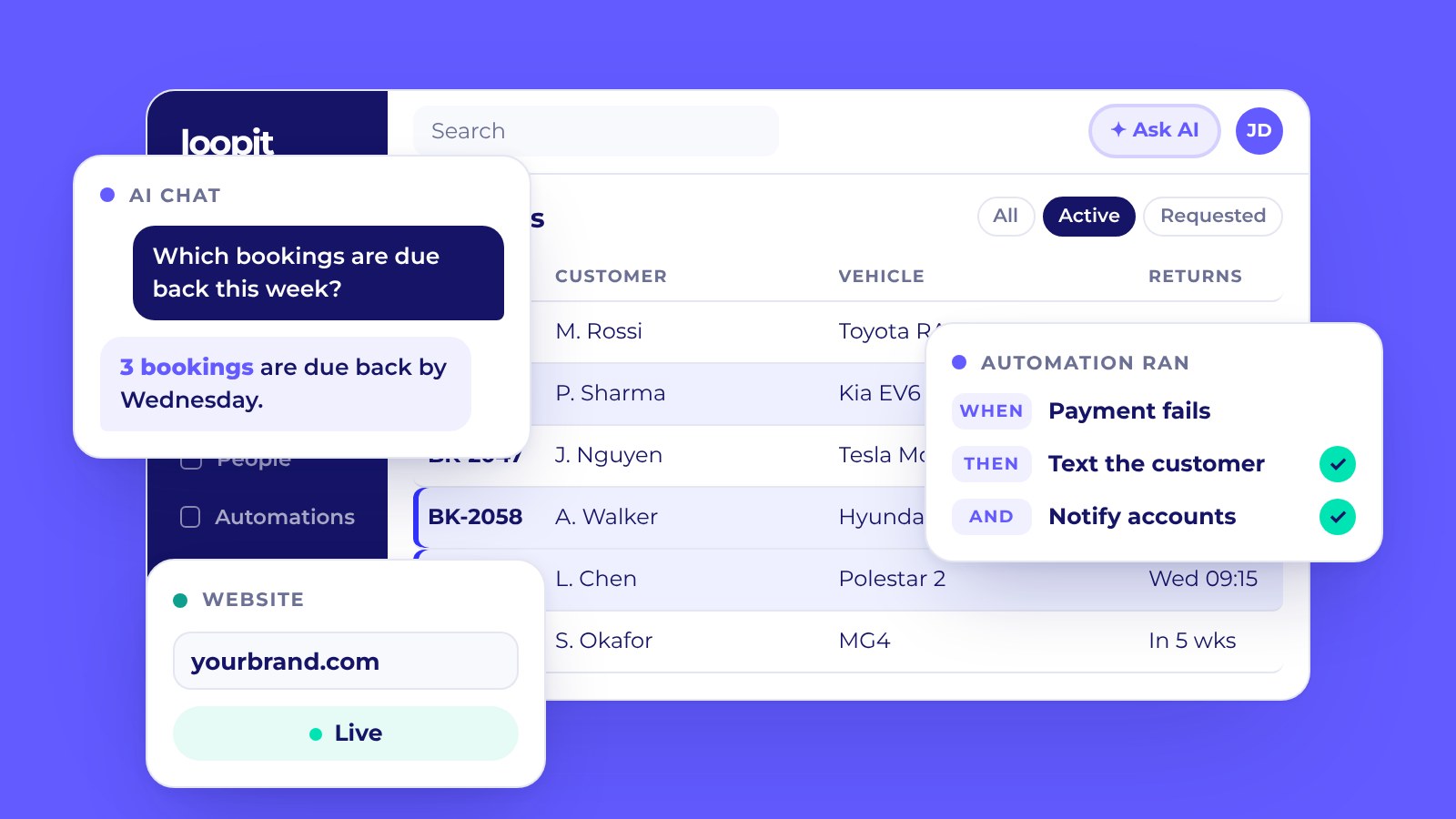
AI Chat, Automations and a new Website are now part of Loopit. Together they answer the questions your team asks every day, handle the follow-ups that slip when things get busy, and bring bookings in under your own brand.
The real cost of recurring revenue
Ask anyone who runs subscriptions or long-term rentals where the time goes, and the answer is rarely the booking. It's everything around it. Checking which registrations are due. Working out which invoices are overdue and by how much. Texting a customer whose card declined, then telling accounts. Sending pickup instructions. Remembering to check a driver's license before a long-term booking is confirmed.
None of these jobs is hard. The trouble is that each one depends on someone knowing where to look and remembering to act. As a fleet grows, that's the part that stops scaling.
AI changes this. Not as a separate tool to learn, but as a way for Loopit to answer from your own data and keep the routine work moving. Recurring revenue no longer has to mean recurring admin.
AI Chat: ask Loopit, get an answer from your account
Finding something in Loopit used to mean knowing which screen or report held it, or raising a support ticket. Now you can ask. Type a question in plain English and the answer comes from your own fleet, bookings and invoices, not a generic help article.
Questions like these:
- Which vehicles have registration expiring in the next 90 days?
- Which customers have the oldest unpaid invoices?
- Which vehicles have overdue service reminders right now?
- How many quotes from the last 7 days haven't converted to a booking?
AI Chat suggests questions for the page you're on, and it can show you the automation behind a question or set one up for you. You can see how much it's used across your workspace and by each person on your team. Read more on the AI Chat page, or in our post on what changes when you can just ask.
Automations: whenever this happens, Loopit does that
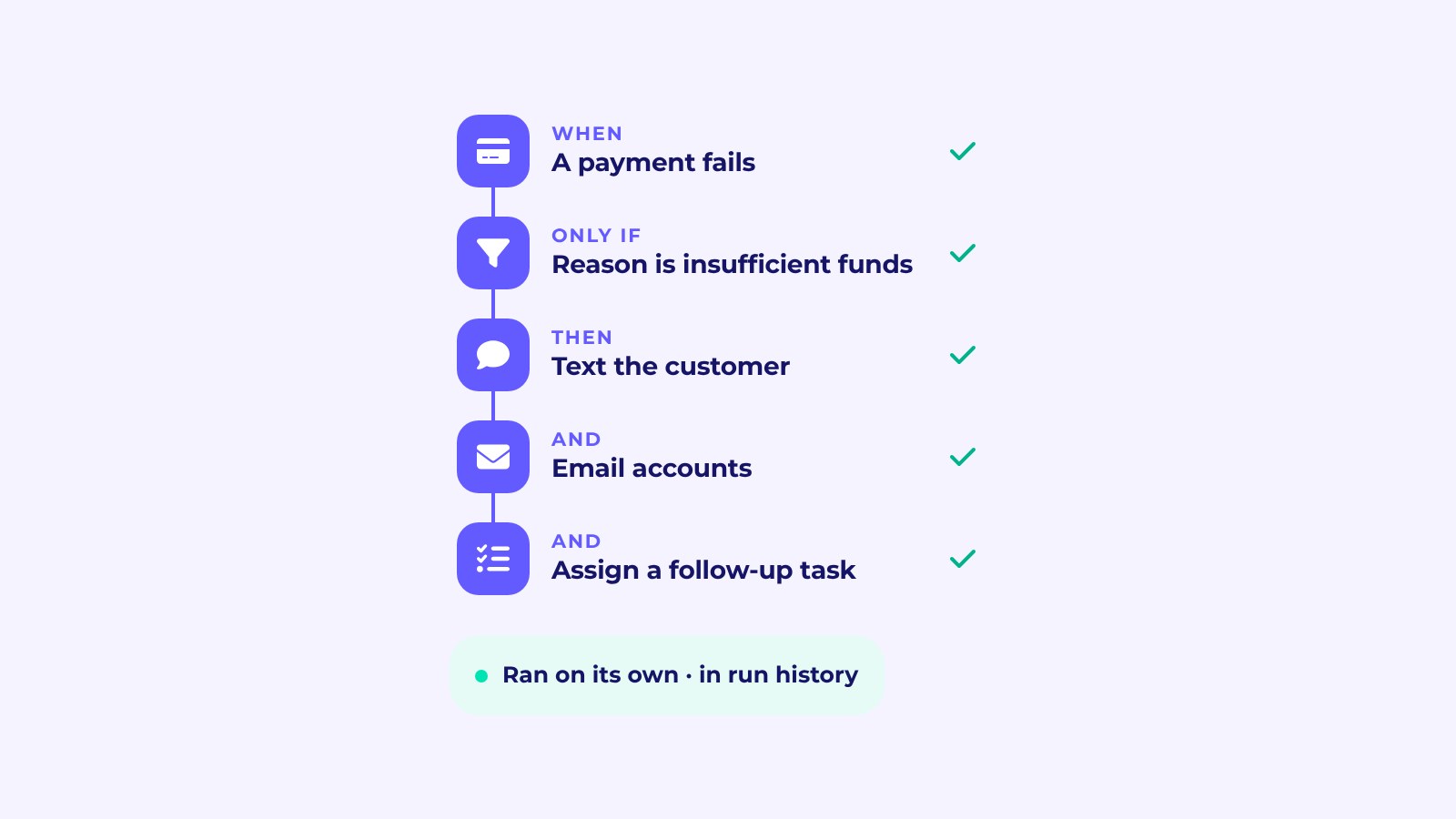
Automations turn the follow-ups your team does by hand into rules that run on their own. Each one follows the same simple shape: when something happens, only if certain conditions are true, then do this. There's no flowchart to learn.
- When a payment fails, text the customer and let accounts know.
- When a booking goes active, send the customer pickup instructions.
- When a service reminder is created, assign a task to the workshop.
- When a long-term booking comes in, send a TruPass request before it's confirmed.
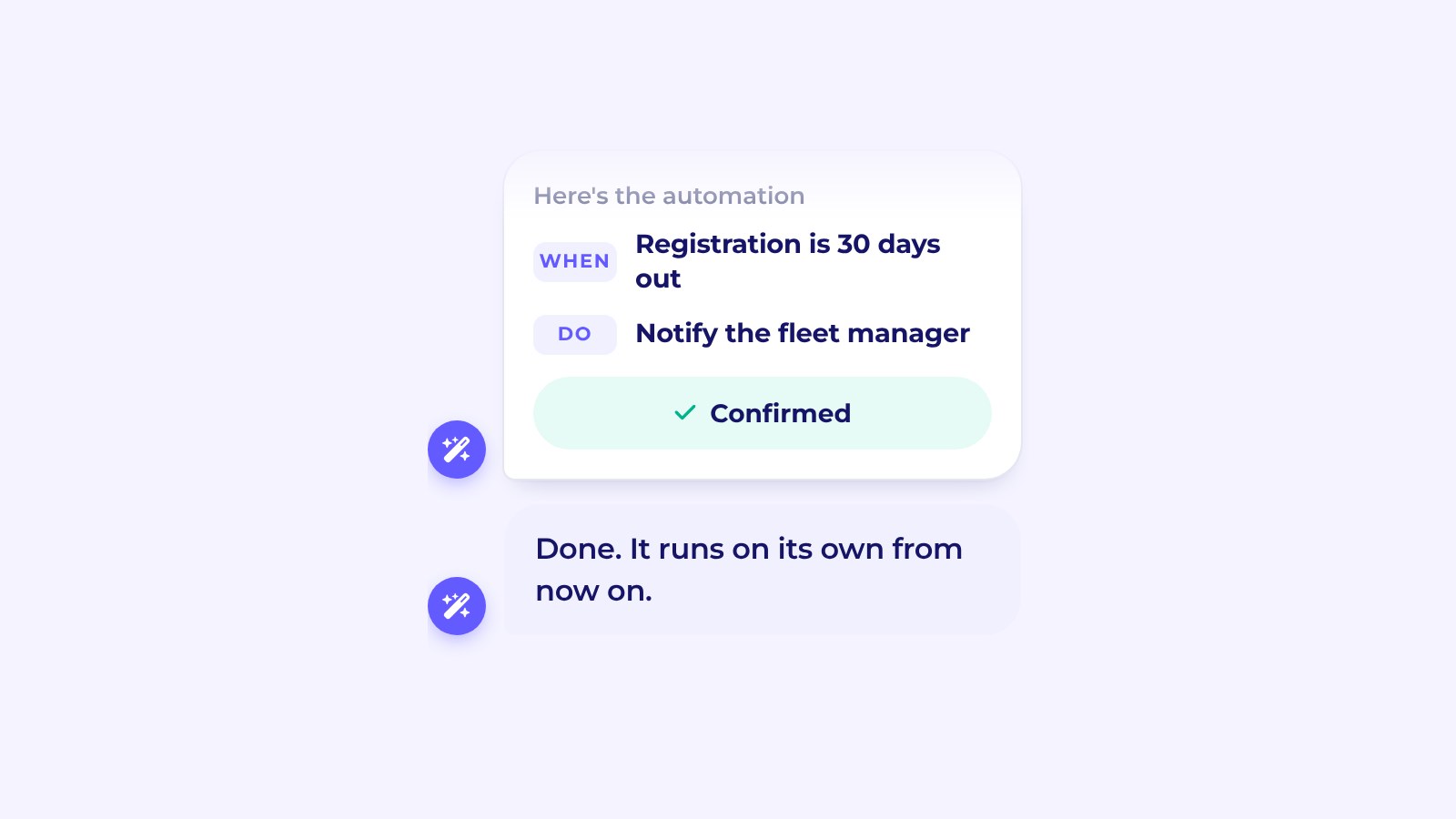
You can build an automation yourself, or describe it to AI Chat and Loopit lays out the trigger, conditions and actions for you to confirm. Each workspace gets a dashboard showing what's running, with a history of every run and every change. See the Automations page, or read how automations take the follow-up off your team.
Website: your brand, your website, your bookings
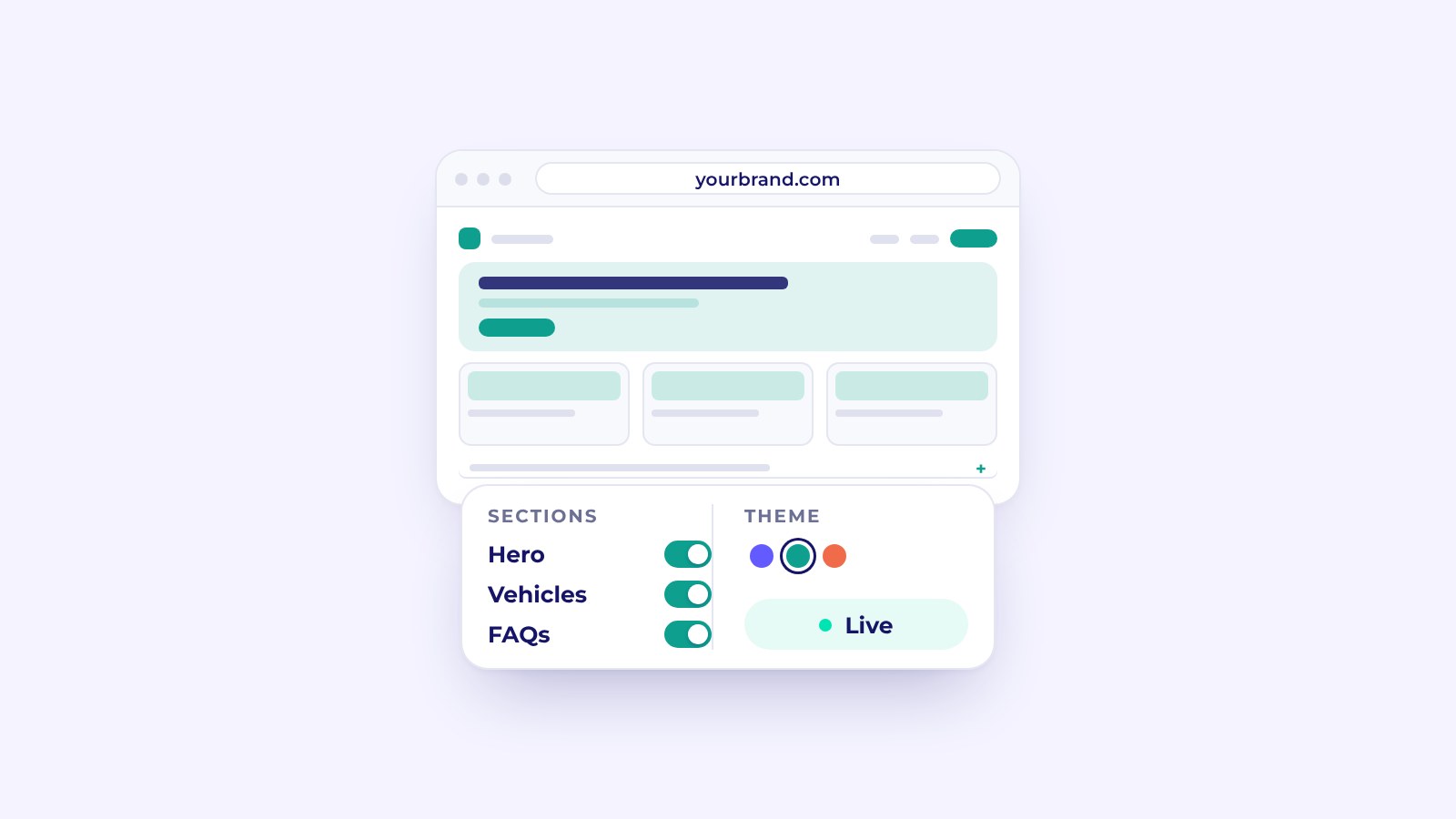
A booking form sitting in an iframe on someone else's site doesn't do much for your brand. Loopit's website is now a multi-page site that looks like your business: a home page built from sections, vehicle listings, locations, and about and contact pages, on your own domain.
You choose the theme, logos, images, navigation and wording, and change them yourself whenever you like. Add FAQs to the pages that need them, set how each page appears in search and when shared, and see which pages turn visitors into bookings with funnel analytics built in. The booking flow is cleaner too, and partners can place it on their own sites with a simple script instead of an iframe. There's more on the Website page and in why operators should own their booking site.
Also new in Loopit
Eight more updates sit alongside the three above, most of them built from what operators have asked for:
- TruPass secure self-upload. Send a secure link and customers upload their own photo and documents in minutes.
- Contract signing at the counter. Send a contract to a tablet or kiosk and the customer reads and signs it in front of you.
- Automated deposit refunds. Deposits refund automatically a set number of days after the booking ends, less any outstanding invoices or fees.
- Price overrides. Rebuilt to be easier to use, with more controls. Reprice by package, category or vehicle in one grid, with CSV import and export.
- Fleet Calendar. Advanced filters and controls, plus a new schedule view that lists every activity in order, filterable by location.
- Asset location history. See where each vehicle is, where it goes next and where it has been, from your booking data.
- Invoice templates. Customize the branding and layout of your invoice headers.
- Booking flags and notes. Loopit surfaces warnings and flags on bookings, and your team can add their own flags or pin notes, so staff have the full picture when making decisions.
Built on the platform you already know
None of this replaces how Loopit works. Bookings, recurring billing, deposits, TruPass and the fleet calendar all sit where they were. AI Chat answers from the data already in your account, Automations run on the events that already happen there, and the website draws on the fleet and packages you already manage. The new parts sit on top of the platform rather than beside it, so there's no second system to learn or keep in sync.
You stay in charge
Loopit works from your own account and sets things up for you to confirm. An automation built in chat isn't created until you approve it. Every run is recorded, and every change shows who made it. Automations send messages, notify your team and assign tasks; they don't change your records. AI Chat answers questions and helps you set things up, and the decisions stay with you and your team.
What this means for your business
The operators getting the most from recurring revenue aren't the ones with the biggest teams. They're the ones whose follow-ups happen on time, whose customers are verified before handover, and whose bookings come in direct. That's what Loopit is built to help with.
If you already run on Loopit, you'll find these updates in your account. If you're weighing up subscriptions alongside your rentals, or you've outgrown a system that charges every rental as a one-off invoice, get started or contact sales and we'll show you on a working account.